
On-Device AI Is Where the AI PC Becomes Useful, Not Flashy
Why on-device AI and AI PCs matters now, what can go wrong, and how product teams should turn the trend into a reliable operating plan.

Infrastructure Editor
Key takeaways
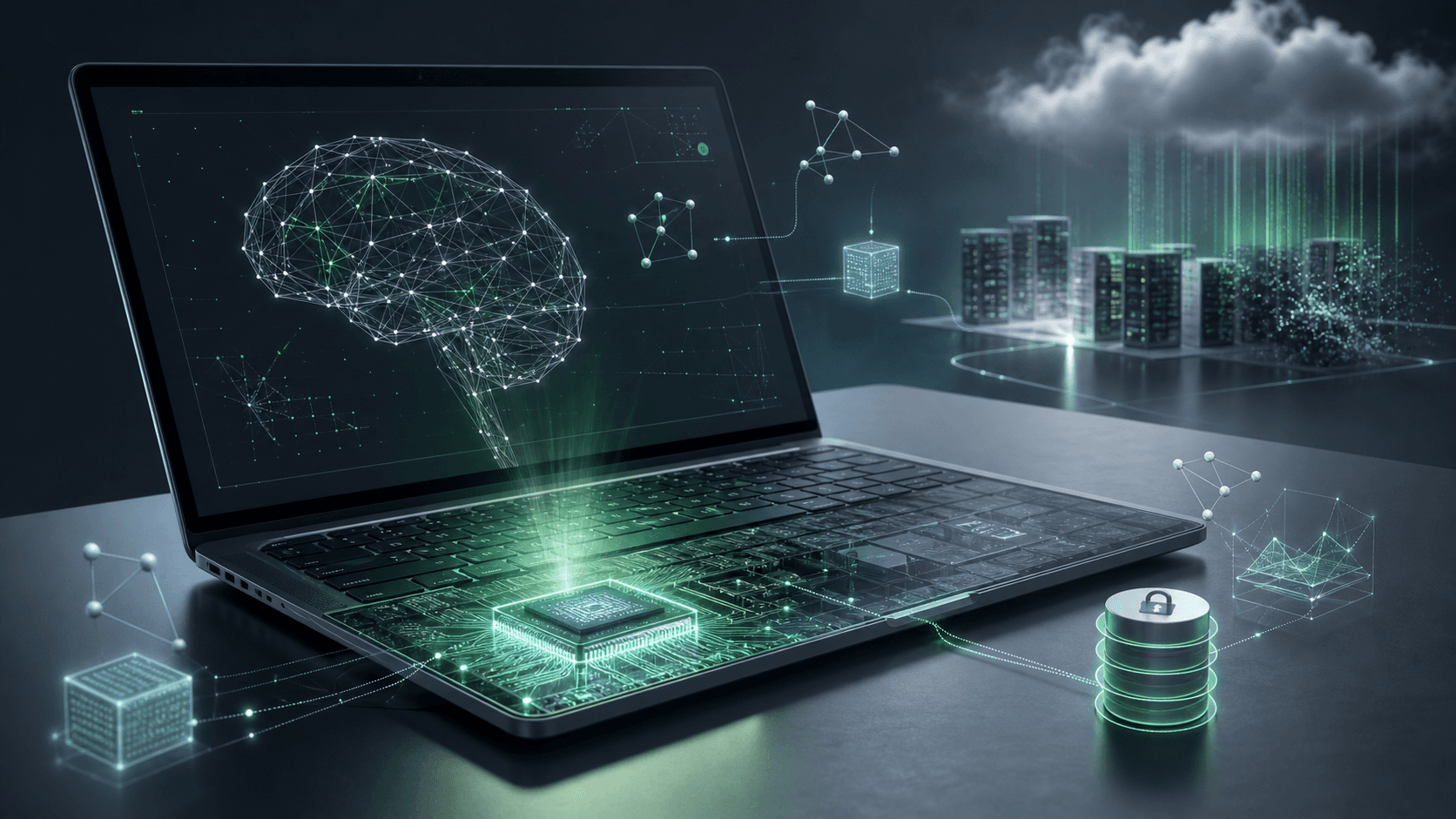
- The practical response is to software route private repetitive tasks to local models and reserve cloud models for heavier jobs. That sounds simple, but it changes product planning, vendor review, measurement...
- The fragile point is this: a fast NPU without software, policy and endpoint security is only a benchmark story. If leaders ignore that weakness, the technology may create a new class of failure instead of re...
- In the end, AI PCs stop sounding like a category and start feeling like computers that understand work. Companies that learn this early turn technology into stable capability; companies that wait will migrat...
Summary
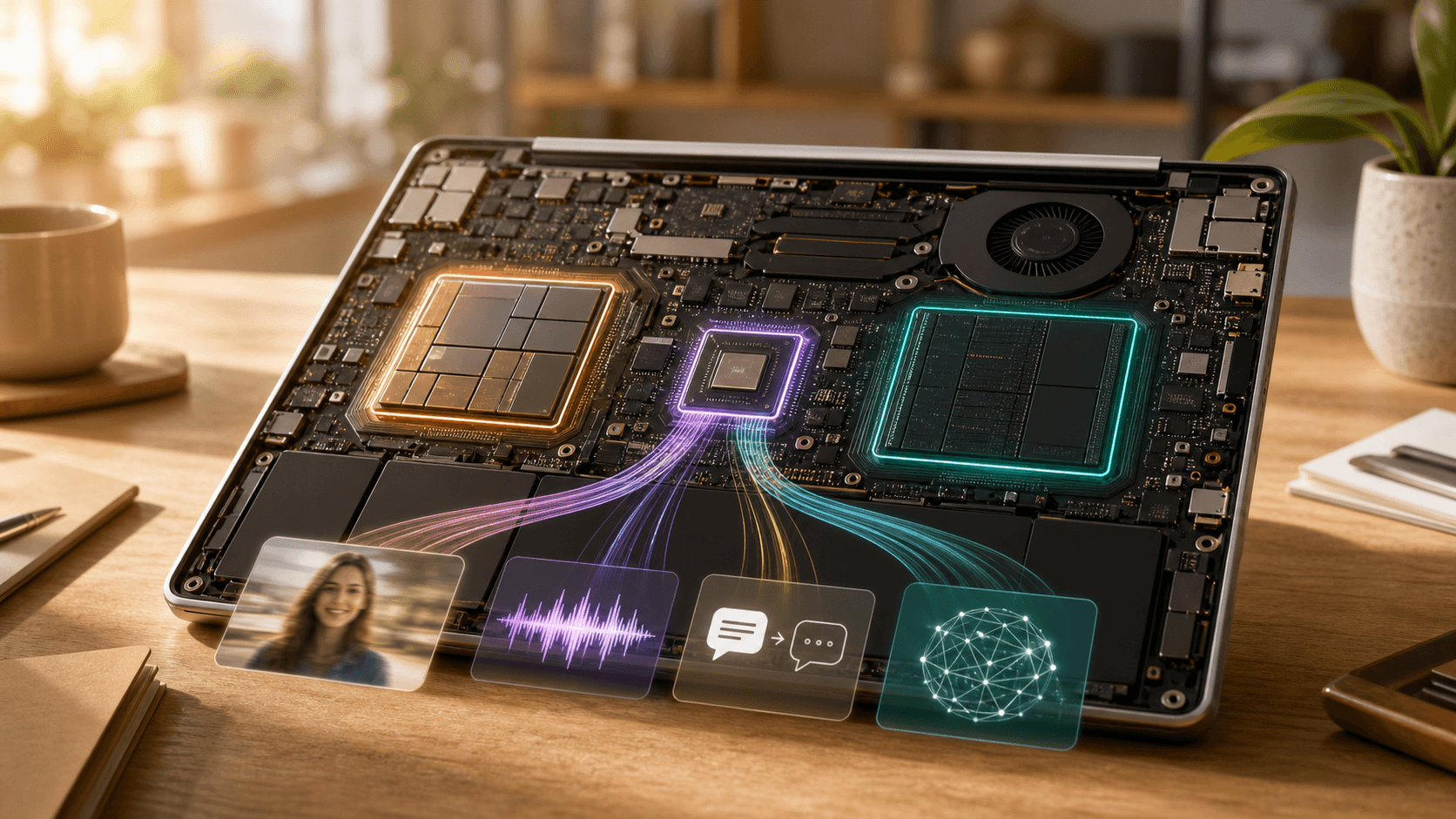
on-device AI and AI PCs is moving from future-talk into operating work. The reason is clear: cloud inference brings latency, cost, bandwidth and privacy tradeoffs for routine work. When that shift reaches real users, the winners are not the teams with the loudest demo, but the teams with process, ownership and recovery paths.
The practical response is to route private repetitive tasks to local models and reserve cloud models for heavier jobs. That sounds simple, but it changes product planning, vendor review, measurement, security and support. A trend becomes real when it has to survive messy workflows.
The fragile point is this: a fast NPU without software, policy and endpoint security is only a benchmark story. If leaders ignore that weakness, the technology may create a new class of failure instead of reducing the old one.
Article
Teams should start with a narrow use case, a named owner, a clear success metric, a rollback path and a public explanation users can understand. This is slower than a launch headline, but it builds trust that can compound.
The regional story matters too. English-speaking enterprise buyers will ask for proof, controls and predictable support before they depend on a new layer of infrastructure.
Implementation should be treated as an editorial and engineering system, not a one-off feature. The team needs a review cadence, documented assumptions, ownership for failures, and a way to explain decisions to non-technical readers without hiding the messy parts.
Metrics also matter. Adoption alone is not enough; teams should measure accuracy, recovery time, user trust, operational cost and the number of cases where the system prevented confusion rather than merely adding another layer of automation.
For product leaders, the bad-day question matters most. Does the system limit damage, reveal state, preserve evidence and let humans recover without improvising? If not, the roadmap is not mature yet.
In the end, AI PCs stop sounding like a category and start feeling like computers that understand work. Companies that learn this early turn technology into stable capability; companies that wait will migrate under pressure.
“Good technology journalism helps the reader make a better decision after reading.”
About the author

Michael Lee
Infrastructure Editor
Michael covers chips, cloud platforms, data centers, software infrastructure, and the economics behind large-scale computing.