
AI Data Centers Are Turning the Power Grid Into the Next Tech Bottleneck
The AI boom is no longer only a race for chips and models. It is becoming a race for electricity, permits, cooling, grid upgrades and political trust in the communities asked to host the new computing layer.

Infrastructure Editor
Key takeaways
- AI infrastructure is becoming an energy and permitting problem as much as a chip problem.
- The winners will be companies that plan compute, power, cooling and community trust together.
- Enterprises should evaluate AI providers by resilience and energy strategy, not only benchmark speed.
Summary
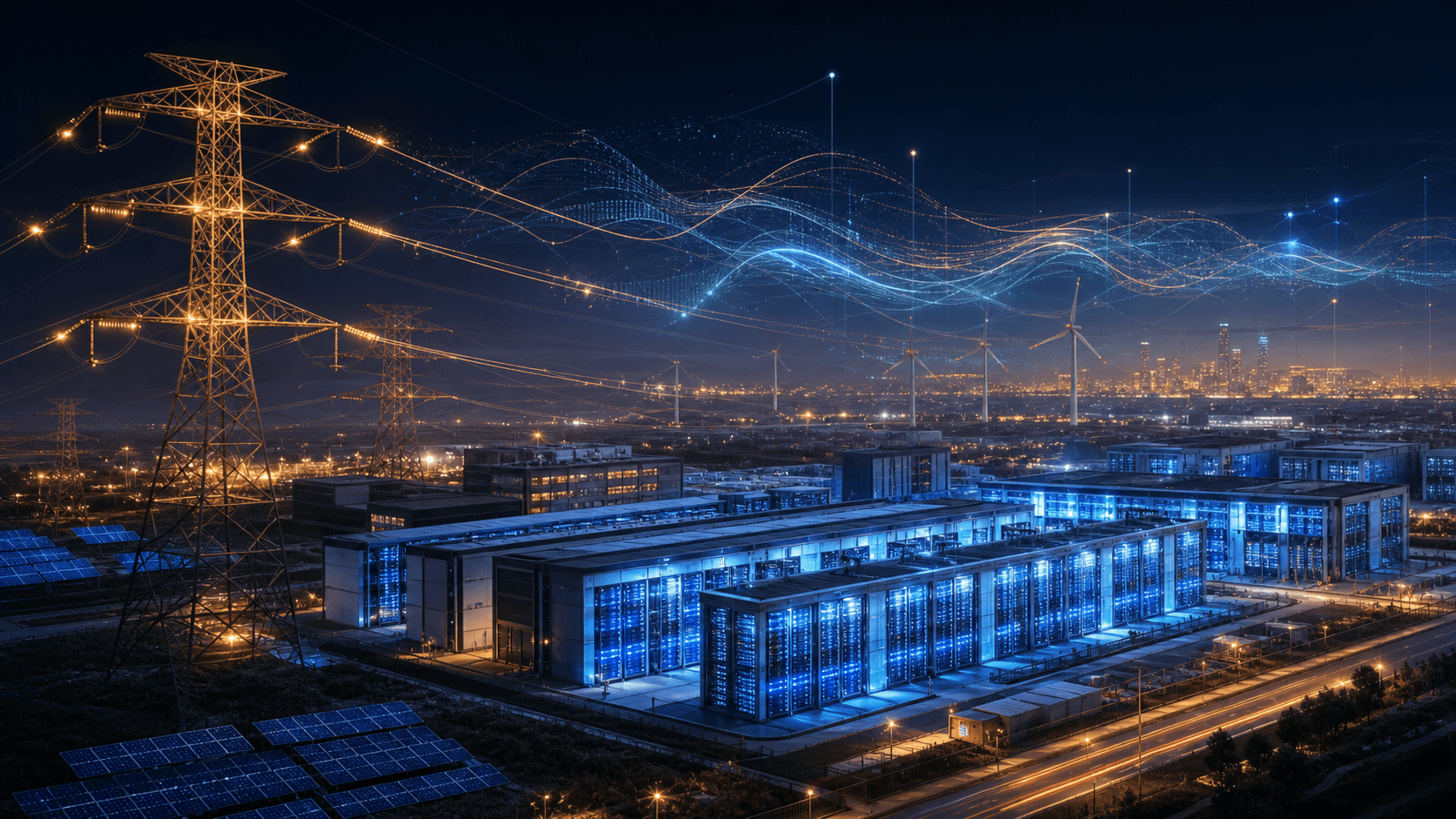
For the last two years, the AI infrastructure story was usually told through GPUs, model sizes and cloud capacity. That story is incomplete now. The most important constraint may be the thing most software teams used to ignore: whether enough electricity can arrive at the right building, at the right hour, through a grid that was never designed for this style of computing growth.
AI data centers are different from ordinary enterprise hosting facilities. They concentrate dense racks, continuous training workloads, high-power networking, cooling systems and backup equipment into campuses that can consume as much electricity as a small city. That does not make them inherently bad. It does make them impossible to treat as invisible internet plumbing.
The practical lesson is simple: AI strategy has become infrastructure strategy. A company planning agentic workflows, model-heavy products or real-time inference cannot only ask which model is best. It has to ask where the model runs, how stable the power supply is, what happens during grid stress, and whether local communities see the facility as progress or extraction.
Article
The modern internet was built on a comforting fiction: computation felt weightless. A user clicked a button, a cloud region answered, and the physical work disappeared behind an interface. AI is breaking that illusion. When millions of users ask models to reason, code, generate images, search documents or operate agents, the hidden machinery becomes visible again. The server is not a metaphor. It is a building, a transformer, a cooling loop, a fiber route and a utility contract.
This shift changes the economics of AI. A model provider that can secure power early may move faster than a rival with more elegant research but slower infrastructure. A cloud platform with flexible energy agreements can price inference more confidently. A startup that depends on one provider may discover that latency, quota and cost are shaped by local grid conditions it never studied. The future of AI is not only mathematical; it is electrical.
The pressure also exposes a planning gap inside many companies. Product leaders often discuss AI adoption as if compute can be bought instantly from an API. That assumption works for pilots, but it weakens at scale. A customer-support agent that handles ten thousand conversations a day is different from a demo. A legal review system that runs long-context analysis every night is different from a hackathon prototype. Each successful workflow creates a recurring claim on power, cooling and capacity.
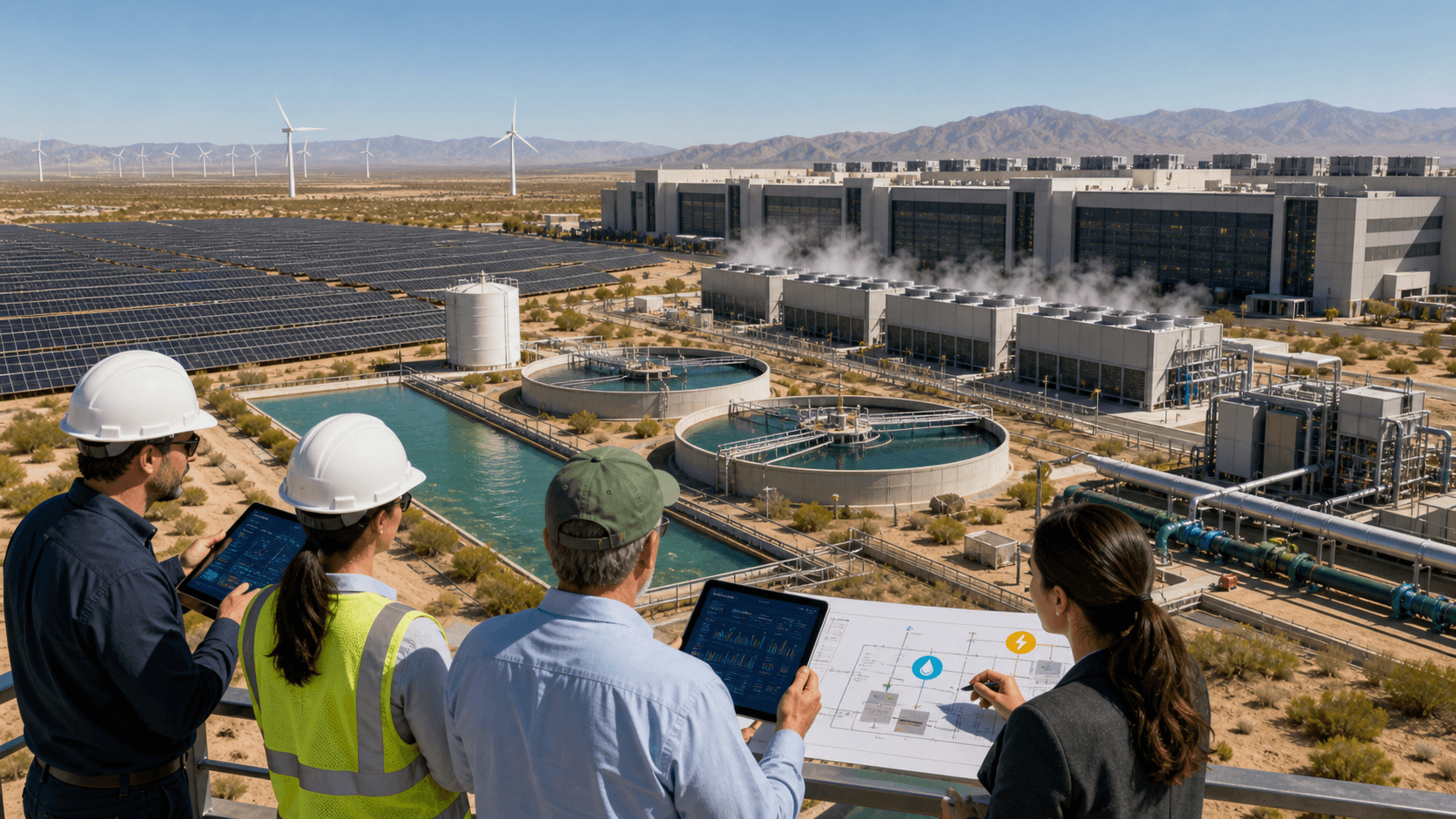
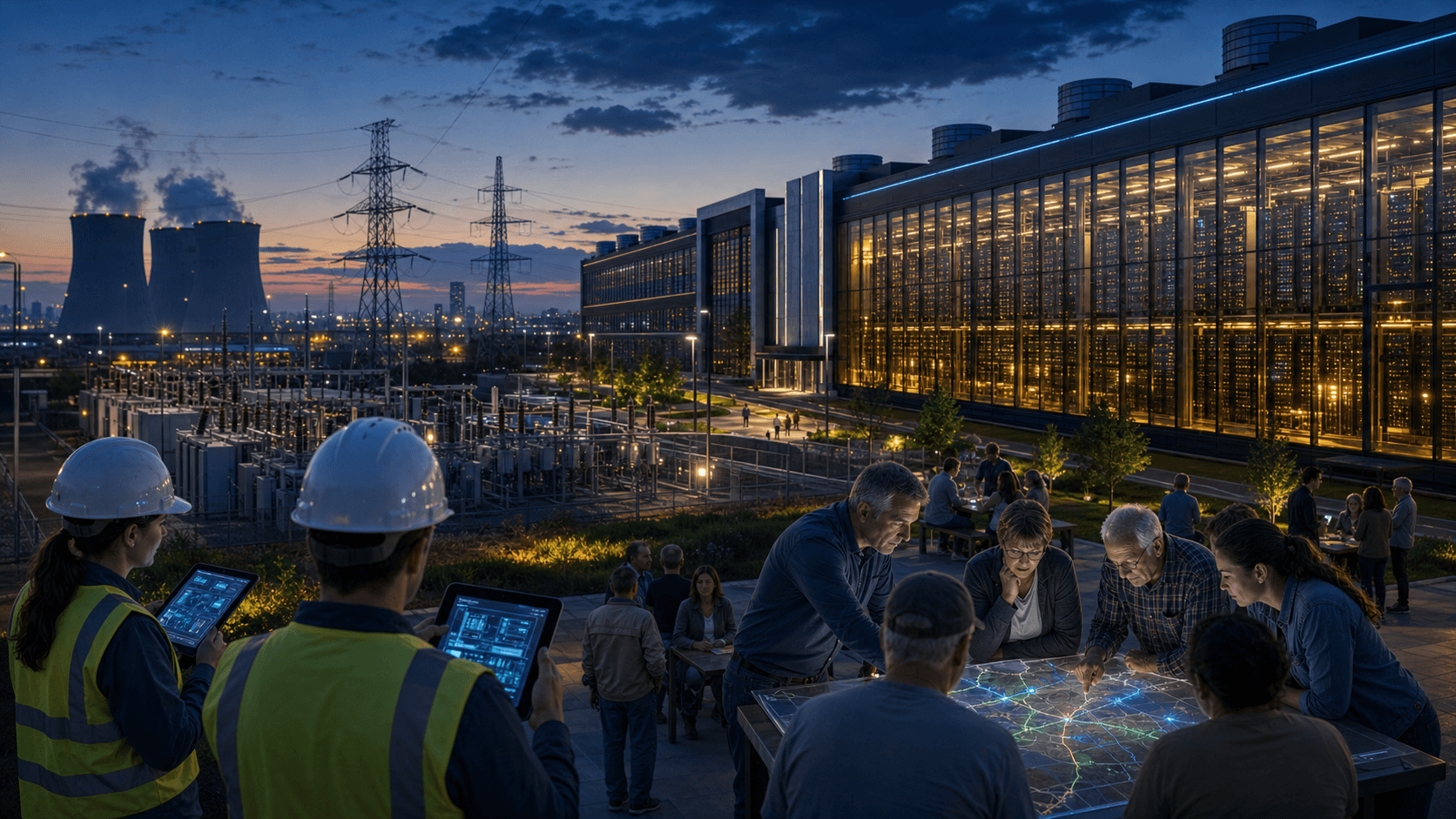
Governments and utilities are now being pulled into the product roadmap. Permits, interconnection queues, water usage, backup generation, renewable contracts and transmission upgrades can decide how quickly a region becomes an AI hub. The cities that manage this well will attract investment without exhausting public patience. The cities that manage it poorly may see backlash: higher bills, land-use fights, water concerns and the feeling that residents are paying the hidden cost of someone else's automation.
There is a more mature path. Data center builders can publish clearer community commitments, use grid-friendly load management, recover heat where practical, invest in local resilience and avoid treating renewable certificates as a substitute for real operational discipline. Cloud buyers can demand transparency about region-level reliability, carbon intensity, disaster recovery and workload placement. Enterprise AI teams can design products that cache more, batch more, choose smaller models where possible and reserve frontier inference for work that truly needs it.
The most overlooked efficiency gain is product restraint. Not every button needs a large model call. Not every page needs live generation. Not every internal workflow needs instant response. If teams measure useful outcome per watt, they will make better systems than teams that measure only tokens per second. A well-designed AI product can feel magical to the user while being boringly disciplined underneath.
This is why the power grid has become a technology issue. The next bottleneck is not a single missing chip or a single cloud outage. It is the coordination problem between software ambition and physical capacity. AI companies that understand this will look less like pure software firms and more like infrastructure operators with public responsibilities.
The winners will not be the loudest companies announcing the biggest clusters. They will be the ones that can keep those clusters useful, affordable and socially acceptable for years. In the AI era, compute is no longer just a resource to rent. It is a promise made to users, utilities and cities at the same time.
“Good technology journalism helps the reader make a better decision after reading.”
About the author

Michael Lee
Infrastructure Editor
Michael covers chips, cloud platforms, data centers, software infrastructure, and the economics behind large-scale computing.