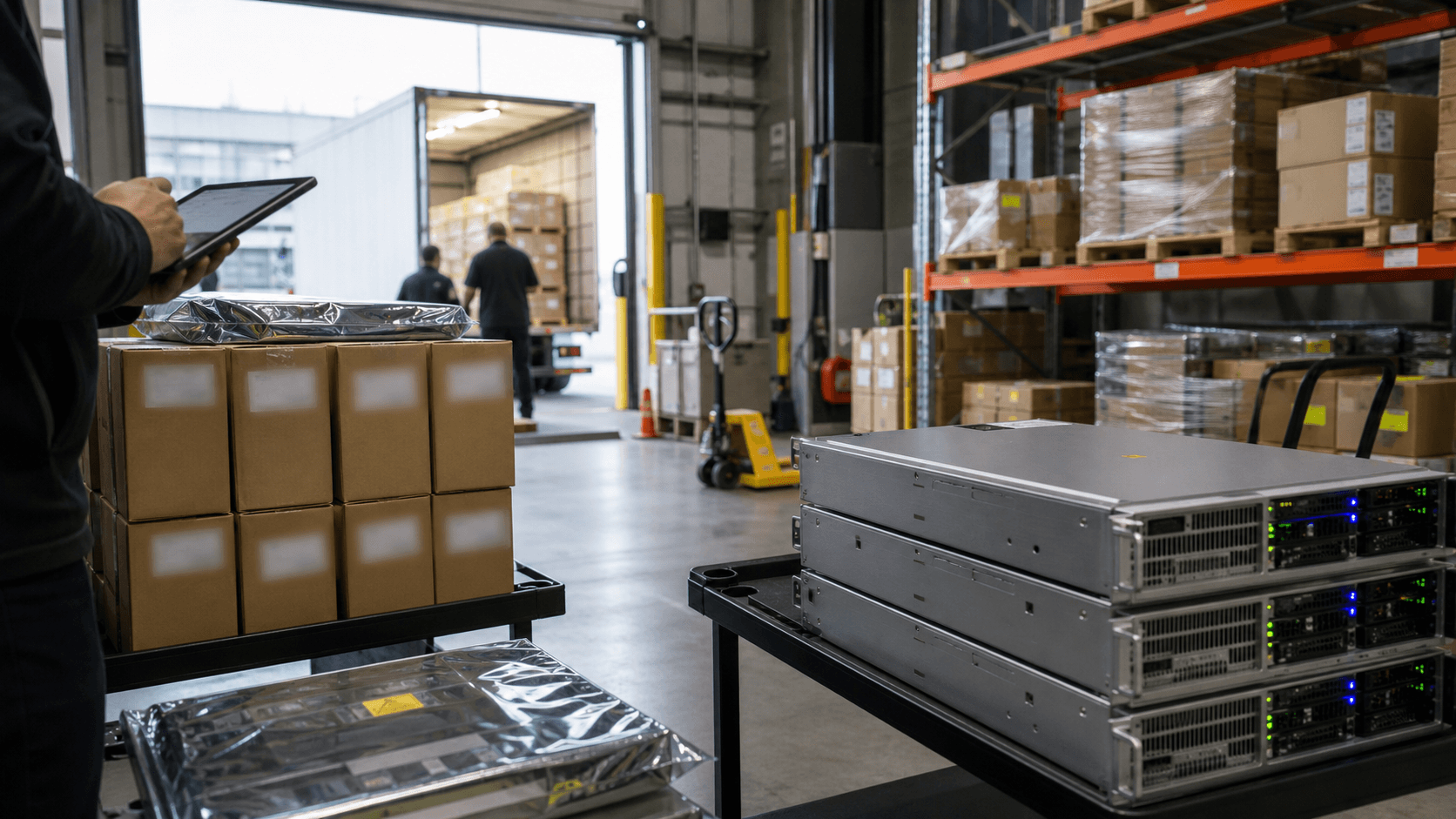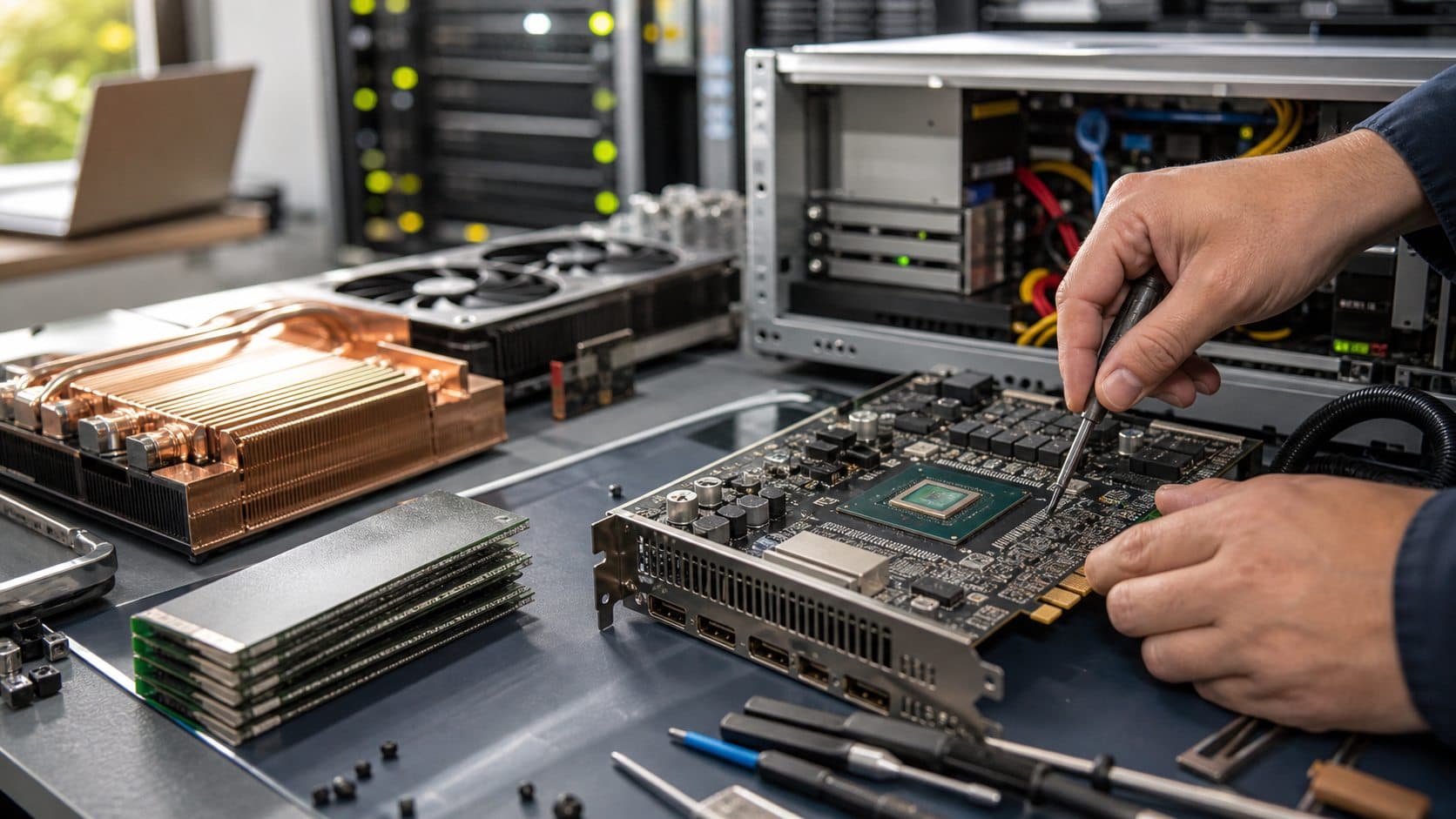

AI Data Centers Just Hit the Power and Water Wall
New York’s one-year pause on hyperscale data centers is not just a local policy fight. It is a preview of the physical limits shaping the next phase of AI.

Infrastructure Editor
What happened
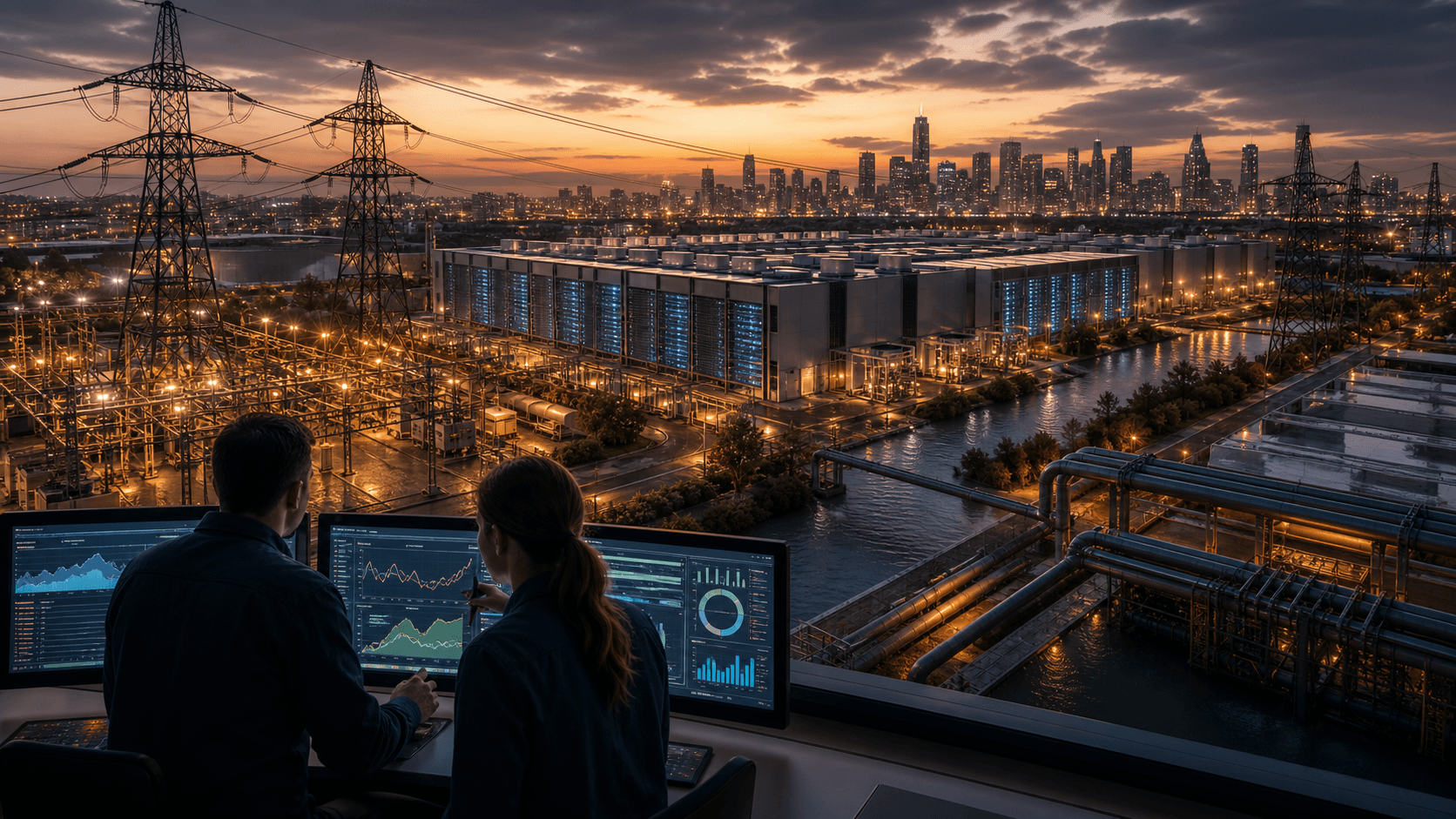
New York’s one-year pause on new hyperscale data center permits moved the AI story out of model benchmarks and into the everyday language of electricity bills, water pressure, noise, land use, and local consent. That is why this is bigger than one state. When a large economy says AI infrastructure cannot grow without a clearer contract with communities, it signals a new phase for the entire industry: the next bottleneck is not only chips, it is permission to connect, cool, power, and expand.
The state’s executive order points to almost 12 gigawatts of data center load requests in the New York interconnection queue, with more than eight gigawatts entering during 2025 alone. For most readers, that number sounds abstract. In practice it means AI is starting to behave like a heavy physical industry. Every smarter assistant, faster image model, coding agent, or enterprise copilot requires racks, transformers, substations, cooling systems, fiber routes, water plans, and long-term energy contracts.
The important shift is that AI is no longer merely software. Users see a chat window, but behind that window is a dense stack of power engineering, memory supply, advanced packaging, network design, and local politics. If that stack is built badly, the cost can appear as higher utility bills, water stress, permitting fights, and public backlash. The public is not rejecting intelligence; it is asking who pays for the infrastructure that makes intelligence cheap at the screen.
Why it matters
AI data centers differ from ordinary digital infrastructure because their compute loads are denser and more aggressive. Training runs, inference at global scale, high-bandwidth memory, internal networking, and liquid or evaporative cooling can create demand that local grids were not designed to absorb quickly. A new campus is not just a building full of servers. It is often a grid upgrade, a water decision, a tax negotiation, and a long-term claim on regional capacity.
For companies, the New York pause is a risk memo. AI strategy cannot be reduced to model choice, GPU access, or cloud discounts. Power availability, environmental permits, community benefits, water treatment, tax policy, and public trust are now part of deployment risk. A project can look attractive on a spreadsheet and still fail if the interconnection timeline slips, if local voters organize, or if regulators decide that ratepayers should not subsidize the infrastructure buildout.
For communities, the question is straightforward: if a data center uses local resources, what does the locality receive in return? Stable jobs, tax revenue, grid investment, clean energy commitments, water reuse, noise limits, and transparent monitoring should be discussed before construction, not after opposition hardens. A community that sees costs without clear benefits will resist even technically impressive projects. AI infrastructure needs a social license, not just a purchase order.
The market impact
This is also a strong search topic because it answers questions ordinary readers are already asking: how much electricity does an AI data center use, why are communities opposing data centers, can AI raise power bills, and can water or grid limits slow the AI boom? Those queries sit between news and evergreen education. A good article can serve the breaking story today and keep ranking later as readers try to understand the physical cost of AI.
The market implications reach beyond chipmakers. If permitting and power become the constraint, demand rises for on-site generation, long-term clean-power agreements, liquid cooling, grid equipment, transformers, energy management software, and more efficient inference routing. The winners may include companies that make each token cheaper in watts, not just faster in milliseconds. Infrastructure efficiency becomes a product feature because it protects margin and reduces political friction.
For international readers, the story translates well. Every country that wants AI capacity will face a version of the same tradeoff: jobs and innovation on one side, energy affordability and environmental confidence on the other. The exact law will differ by region, but the pattern will not. AI expansion is becoming a negotiation between cloud ambition and public infrastructure.
What should change
First, developers should disclose more. Communities do not need the model architecture, but they deserve plain numbers: expected power draw, water source, cooling method, noise profile, grid upgrade responsibility, clean-energy plan, and community investment. Lack of clarity makes even responsible projects look suspicious. Good disclosure can shorten conflict because it gives residents something concrete to judge.
Second, AI companies should treat efficiency as product quality. Smaller models that are good enough, better caching, smarter batching, request routing, off-peak scheduling, quantization, and workload-aware hardware choices can matter as much as another hardware purchase. Every wasted watt is not only a cost line. It reduces the public patience available for the next data center.
Third, regulators need a middle path between blanket bans and unchecked growth. A useful framework should accelerate projects that bring local benefits, pay their fair share, conserve water, and prove clean-energy credibility. It should slow projects that externalize cost onto residents. If AI is going to become a general-purpose technology, its infrastructure must become auditable, negotiated, and visible.
Sources and next step
This analysis is based on the official New York governor announcement, Executive Order 62, and AP reporting on the state’s one-year pause. For NovaNews background reading, the articles on HBM and NPU explain why AI hardware creates such intense power and memory pressure.
The short conclusion is simple: AI scale is no longer only about who can buy the most accelerators. It is about who can build capacity that communities will accept. The data center of the AI age is not just a machine room. It is an energy contract, a cooling design, a public promise, and a test of whether the industry can grow without making ordinary users pay invisible costs.
“Good technology journalism helps the reader make a better decision after reading.”
About the author

Michael Lee
Infrastructure Editor
Michael covers chips, cloud platforms, data centers, software infrastructure, and the economics behind large-scale computing.