
Agentic AI Security Starts With One Question: What Is the Agent Allowed to Do?
As AI agents move from chat into browsers, inboxes, code tools and business systems, permission design is becoming the new security architecture.

AI Editor
Why this matters now
agentic AI permission security has moved from a specialist concern into a board-level operating question. OWASP and security teams now treat agentic systems as a distinct risk area because agents can plan, call tools, browse, write code and act with delegated permissions. That does not mean every company must panic, but it does mean the old assumption that infrastructure and security will quietly adapt in the background is no longer good enough.
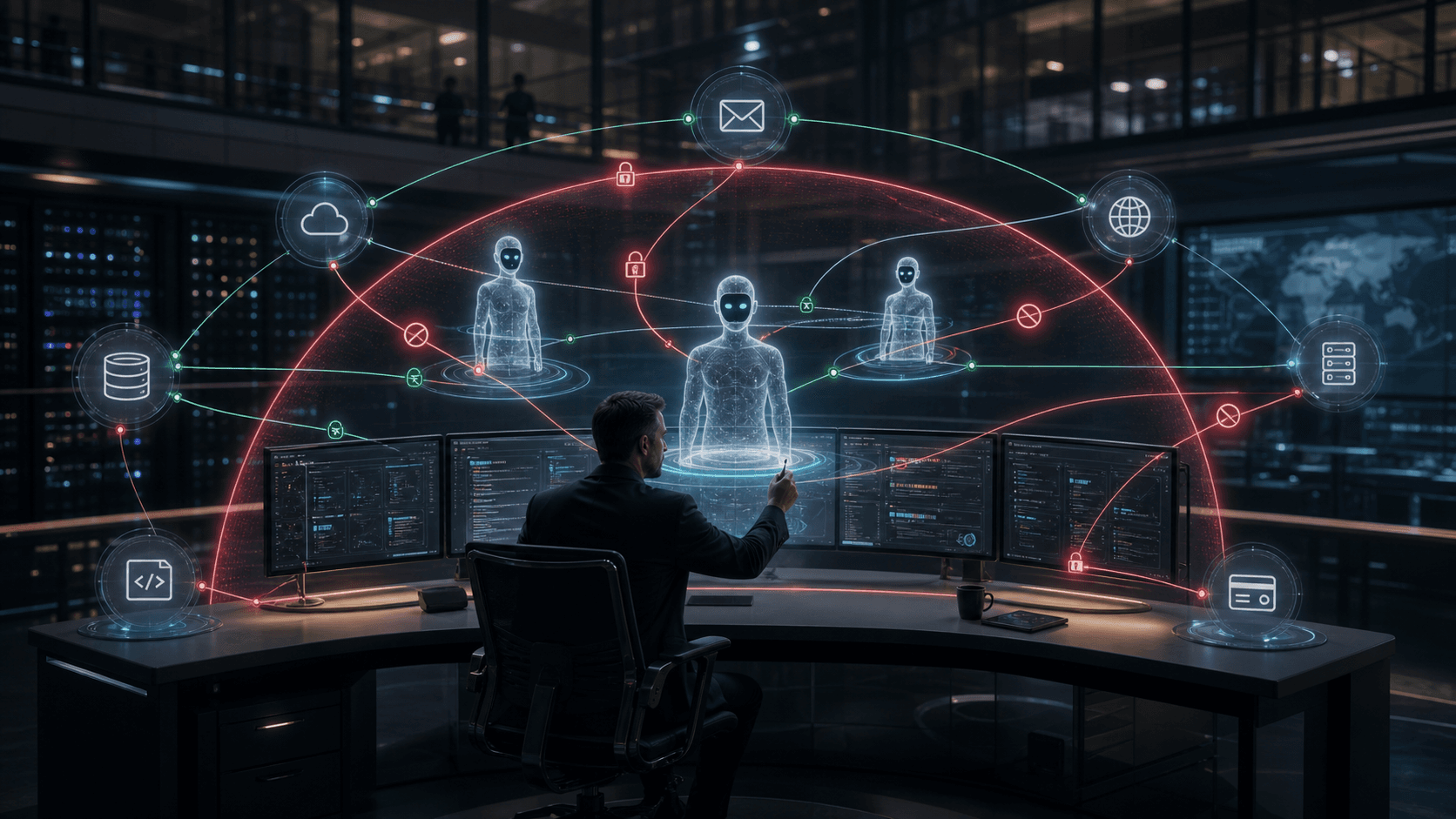
The issue matters because an agent can be helpful precisely because it can act, but the same action path can move data, spend money, send messages or change records. Product teams often discover this too late. A launch meeting talks about features, pricing and user acquisition, while the real constraint sits in permissions, recovery, power, certificates, vendors or operational support.
For AI product teams, security engineers, IT admins and executives approving agent pilots, the strategic shift is simple: technology choices now carry visible promises to users. A secure login promises recoverability. An AI agent promises bounded action. A data center promise includes energy reliability. A cryptographic promise includes future readability and future confidentiality.
For global companies, the issue appears first in small tools: a browser agent books a meeting, drafts a reply, changes a CRM field or opens a document before anyone has written a policy. This is why the topic is broader than a headline. It changes budgets, delivery dates, support scripts, procurement questions and the way a company explains risk to customers.
The product reality behind the headline
The first product reality is that abstract technology becomes painful only when it touches a workflow. Nobody cares about architecture diagrams when everything works. People care when an account cannot be recovered, a model cannot scale, an agent sends the wrong thing or a supplier cannot answer a security questionnaire.
The second reality is dependency. Modern digital products are layered across cloud regions, identity providers, model vendors, browsers, APIs, certificates, mobile devices and support teams. A clean feature on the surface may depend on a messy chain underneath.
The third reality is trust. Users can forgive a clear limit faster than a confident failure. If a company explains what is allowed, what is blocked, how recovery works and who is responsible, the product feels designed. If those answers appear only after an incident, the product feels improvised.
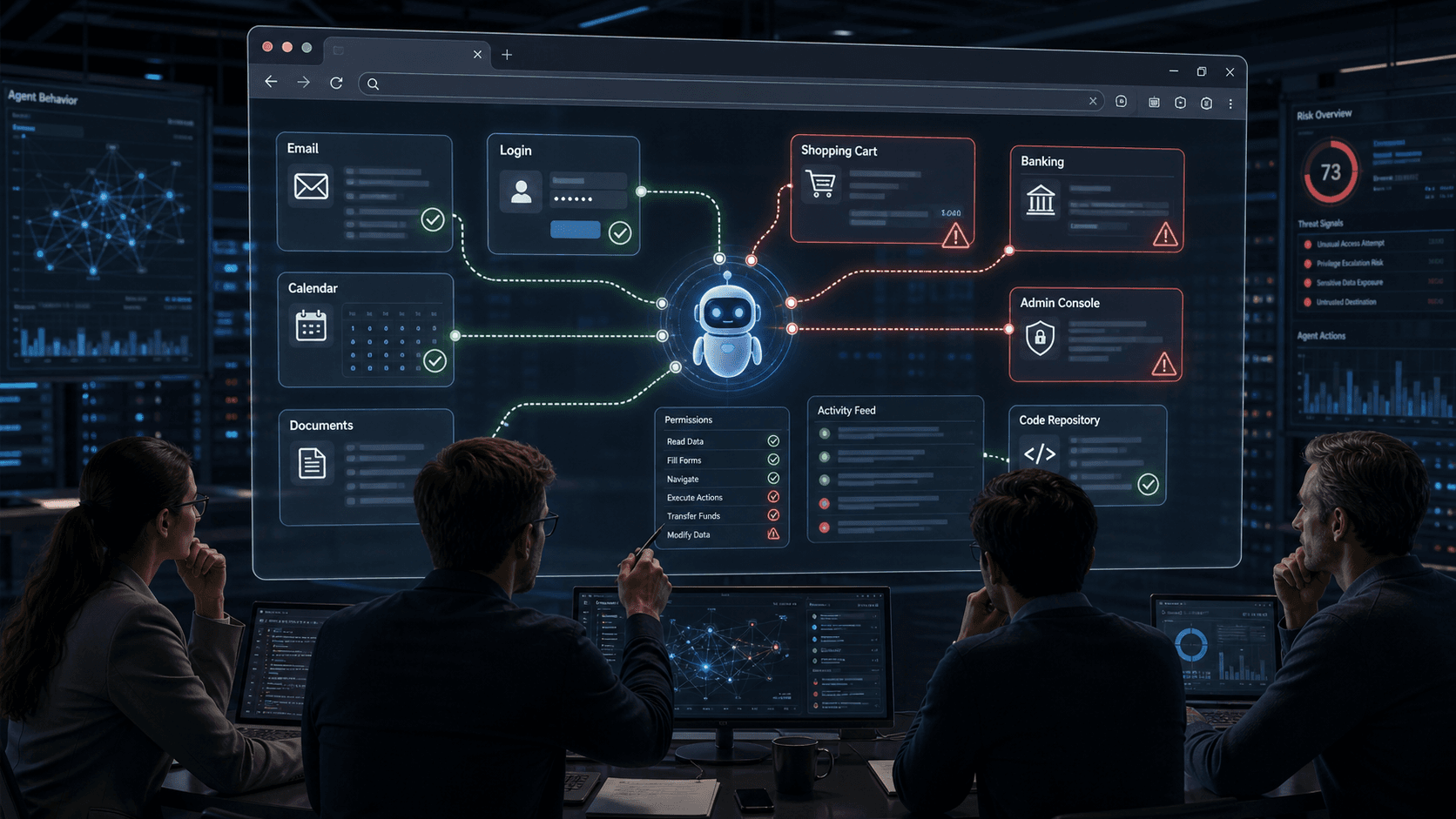
That is why teams should define tools, scopes, approval thresholds, audit logs, memory rules and kill switches before the agent touches production accounts. This is not bureaucracy for its own sake. It is how a team converts uncertainty into a managed operating model.
A practical 90-day plan
During the first 30 days, map the surface area. List where the issue touches users, internal tools, data, vendors, infrastructure, support and compliance. The goal is not a beautiful slide. The goal is a shared inventory that uncomfortable people can still agree is accurate.
From day 31 to day 60, define control points. Which changes require review? Which user journeys need fallback? Which vendors need written answers? Which events trigger rollback? Which logs must exist before launch?
From day 61 to day 90, run a failure rehearsal. Simulate a lost device, a blocked region, a tool injection, a vendor delay, a certificate dependency or a capacity shortage. The point is not fear; it is muscle memory.
By the end of the cycle, the organization should know what it owns, what it depends on, what it can reverse and what it must explain. That clarity turns a broad technology trend into a usable roadmap.
Where durable advantage comes from
Durable advantage rarely looks like the loudest launch. It looks like a team that can ship, observe, explain, recover and improve without exhausting everyone around the product.
Customers increasingly buy evidence, not only capability. They want to know how decisions are logged, how vendors are assessed, how recovery works, how cost is controlled and how the company behaves when the system reaches a boundary.
The executive question is direct: if the assumption changes, can the company still keep its promise? If the answer depends on hidden heroics, the system is immature. If the answer depends on documented controls, the product is becoming infrastructure.
The safest agent is not the weakest agent; it is the agent whose authority is visible, bounded and recoverable.
“Good technology journalism helps the reader make a better decision after reading.”
About the author

Emma Wilson
AI Editor
Emma writes about applied AI, automation strategy, platform shifts, and the practical impact of emerging technology on companies.