

Agentic AI Browsers Are Useful Enough to Become a Security Problem
A browser that can read, click, log in and complete tasks for you is a productivity breakthrough. It is also a new attack surface unless permissions, confirmations and audit logs become first-class features.

Security and data editor
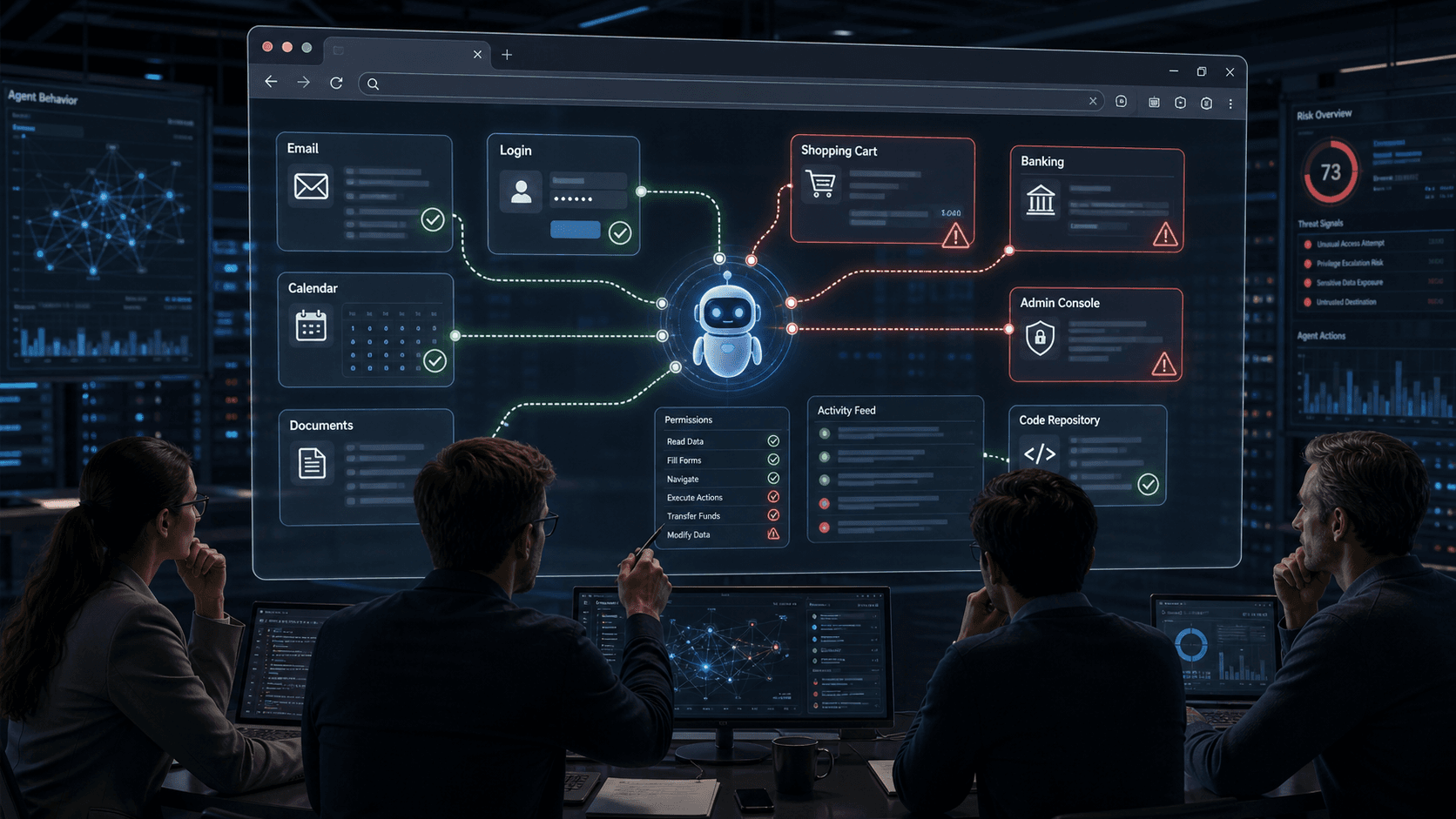
A browser with hands is different
The newest AI browser idea sounds simple: instead of asking a chatbot for instructions, you let an agent open pages, read context, fill forms and click through tasks. That is genuinely useful. It turns the browser from a place where work happens into a worker that can help carry the task.
But a browser with hands is not just a smarter search box. It sits inside logged-in sessions, sees private pages, touches email, documents, banking, shopping carts, admin panels and calendars. When an agent can act, the security model must change from “what can it answer?” to “what can it do without me noticing?”.
That is why recent academic warnings about agentic browsers matter. The risk is not science fiction. It is the familiar web security problem of untrusted content, now connected to an assistant that may be eager to follow instructions.
Prompt injection becomes action injection
Prompt injection is already annoying in chat. In a browser agent, it can become action injection. A malicious page can hide instructions that tell the agent to ignore the user, export data, click an unwanted button or move to another site. The user may never see the hidden text, but the model can.
The problem gets sharper because web pages are messy. Ads, comments, reviews, support tickets and documents all contain text the agent may treat as context. If the agent cannot reliably separate user intent from page content, every website becomes a possible instruction source.
Good design therefore needs hard boundaries: page text can inform the agent, but it should not silently expand permissions. Reading a page is different from sending an email. Summarizing a cart is different from buying. Opening a document is different from sharing it.
The permission model has to feel boring
The safest agentic browser will probably feel boring at the right moments. It will pause before irreversible actions, show what it is about to do, explain which account or data it will touch, and ask for confirmation in plain language. That friction is not a failure; it is the new safety belt.
Permissions also need scope. “Use my browser” is too broad. A useful system should support task-level permissions: read this page, compare these options, draft a reply, fill this form but do not submit, or submit only after I approve the final screen. The user should be able to revoke that authority instantly.
Audit logs matter because memory is weak. If an agent changed a setting, sent a message or downloaded a file, the user needs a clear trail. Without logs, even harmless automation becomes hard to trust after something goes wrong.
How teams should adopt it
Companies should not ban agentic browsers reflexively, because the productivity value is real. They should start with low-risk workflows: research, summarization, internal documentation, draft generation and non-submitting form preparation. Payments, production admin, HR data and privileged cloud consoles should remain restricted until controls mature.
Security teams should test agents the way they test applications: malicious pages, poisoned documents, confusing links, fake login flows, cross-site requests and social-engineering prompts. The question is not whether the model is polite. The question is whether it preserves authority boundaries under pressure.
Agentic browsers will likely become normal. The winners will be the tools that make power visible: clear permissions, clear confirmations, clear logs and clear recovery when the agent makes the wrong move.
“Good technology journalism helps the reader make a better decision after reading.”
About the author

Priya Nair
Security and data editor
Priya covers digital trust, privacy engineering, API governance, identity systems, and the way security choices shape product adoption.