
Local AI PCs Are Back Because Privacy, Cost, and Latency Matter
Cloud models are still powerful, but a growing class of creators, developers, and companies wants AI that runs near the data, responds quickly, and does not send every prompt away.

Infrastructure Editor

The wider context
Local AI PCs are becoming interesting again because the market has learned that not every prompt belongs in the cloud and not every workflow needs the largest frontier model. This is why the story matters beyond one product cycle. Technology becomes serious when it changes who makes decisions, who checks the work, and who carries the consequences after the demo is over. A useful tool can still create bad outcomes if a team adopts it as a shortcut instead of a system.
The pressure comes from privacy, latency, cost, and control. A designer may want image drafts without uploading client assets. A developer may want code help inside a private repository. A small company may want predictable spend. In that environment, the most important question is not whether the technology is impressive. It is whether the surrounding process is mature enough to use it repeatedly. Teams that ask this early tend to avoid the painful middle ground where adoption is high but trust is low.
What actually changes
For creators, studios, medical offices, legal teams, and software groups, local inference is not about rejecting the cloud. It is about choosing where each job should run. The shift is practical before it is philosophical. People do not change workflows because a tool is fashionable; they change when it saves time, reduces errors, or unlocks work that felt stuck. The hard part is proving those gains without ignoring the new responsibilities that arrive with them.
A strong implementation usually starts small. Pick one repeatable workflow, define the expected output, write down what failure looks like, and decide who reviews the result. That sounds slow compared with a launch video, but it is faster than cleaning up a process that scaled before anyone understood it.
The risk beneath the headline
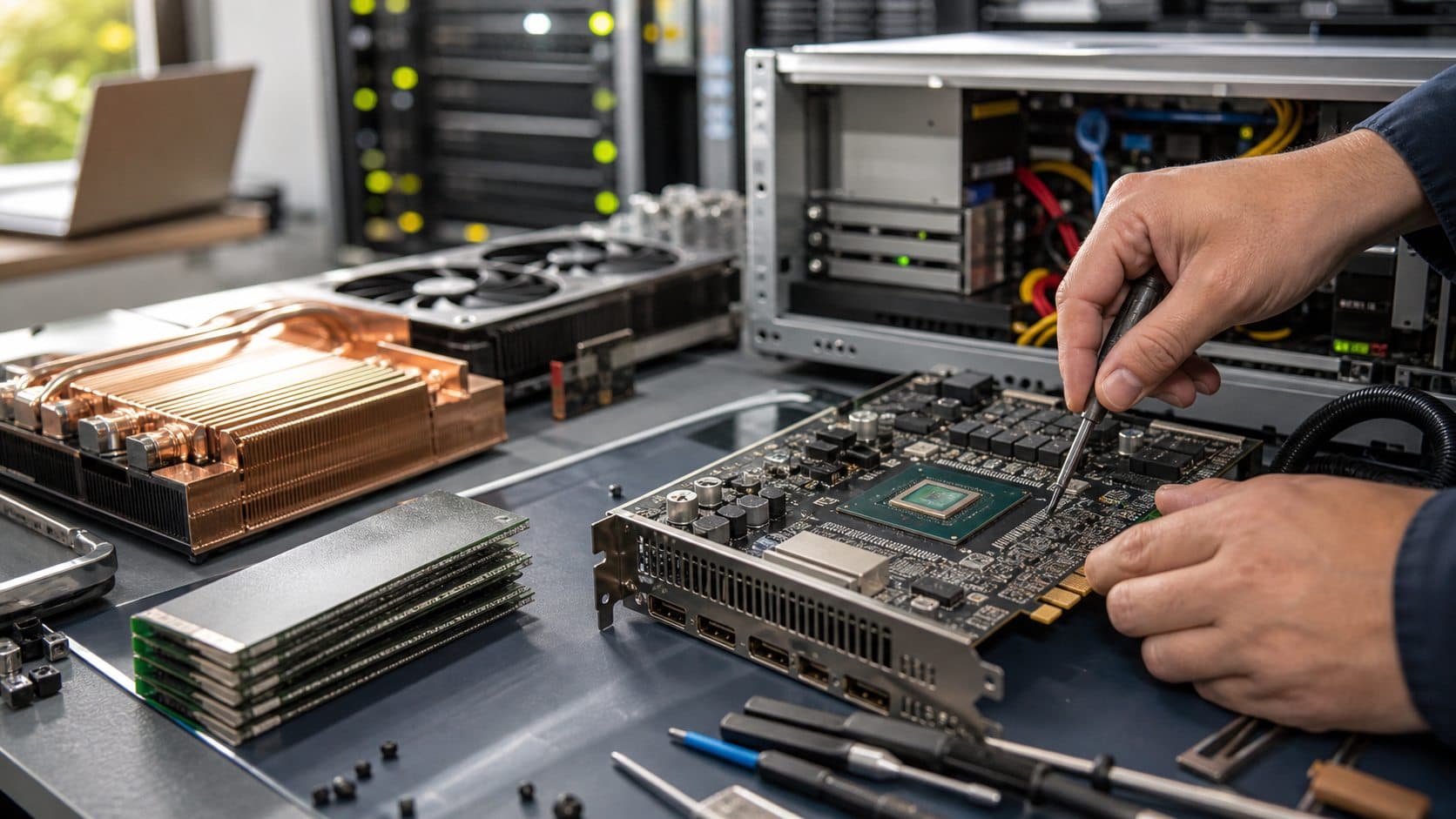
The risk is buying hardware as a symbol instead of matching it to real workloads. A local AI box is useful only if memory, GPU, software support, cooling, and model choice fit the task. This is the part that separates durable adoption from hype. The first week of a new tool often measures excitement; the third month measures maintenance. If nobody owns exceptions, edge cases, cost, security, documentation, and user education, the tool becomes one more system people route around.
The second risk is social. A workflow can be technically correct and still feel unfair, confusing, or intrusive to the people affected by it. Good teams test for that early. They ask who loses control, who gains speed, who has to clean up mistakes, and whether the people most affected have a way to object.
A practical playbook
Which parts of the workflow are sensitive, repeated, latency-bound, or expensive enough to justify running locally? This should be written into the operating model, not left as a vague cultural value. Assign an owner, define review gates, measure quality, keep logs where needed, and create a rollback path before the workflow becomes business-critical. The goal is not bureaucracy; it is memory.
For individuals, the useful habit is to compare the tool against a real alternative. Ask what it does better than the current process, what it makes harder to see, and what you would do if it failed at the worst possible moment. If those answers are clear, adoption becomes a decision rather than a mood.
What to measure after launch
The first useful metric is not raw usage. Usage can rise because a tool is good, but it can also rise because people have no alternative. Better metrics combine adoption with quality, rework, support tickets, user complaints, cost per successful outcome, and time saved after review. A workflow that looks efficient before review may be expensive after corrections.
The second metric is reversibility. Teams should know how quickly they can undo a bad change, migrate away from a weak vendor, replace a model, or return to a manual path during an incident. If the answer is unclear, the organization has not adopted a tool; it has accepted a dependency without understanding its price.
Mistakes to avoid
The most common mistake is celebrating automation before defining judgment. If nobody agrees what good output means, the tool will optimize for speed, confidence, or volume. Those are not the same as value. A second mistake is hiding uncertainty from users because it makes the interface look cleaner. Clean interfaces are useful only when they keep important doubt visible.
The third mistake is treating policy as a document nobody reads. Rules need to appear inside the workflow: in defaults, permissions, warnings, review queues, dashboards, and handoff moments. Governance that lives only in a PDF will not survive the pressure of deadlines, customer requests, and competitive anxiety.
Where this goes next
The likely future is hybrid: small and private tasks nearby, heavy model training and frontier reasoning in the cloud, and smarter routing between both. That future will not arrive as one dramatic switch. It will arrive through many small defaults: where data is processed, how results are reviewed, how failures are reported, and whether people can understand why a system acted the way it did.
Before buying an AI PC, can you name the exact task it will do better than a cloud subscription or an ordinary laptop? Readers should keep returning to that question because it turns a trend into a decision. The best technology stories are not only about capability. They are about the shape of responsibility after capability becomes normal.
“Good technology journalism helps the reader make a better decision after reading.”
About the author

Michael Lee
Infrastructure Editor
Michael covers chips, cloud platforms, data centers, software infrastructure, and the economics behind large-scale computing.