
Anthropic and UST Bring Claude Into Chip Testing and Factory Work
A new partnership puts Claude inside engineering environments used to validate chips, connected devices, and production systems, with human approval still required for high-stakes actions.

Infrastructure Editor
The partnership in plain English
Anthropic announced on July 9, 2026 that it is partnering with UST to bring Claude into engineering environments used by semiconductor, automotive, manufacturing, telecom, embedded, and IoT companies. UST says it will train 20,000 engineers, architects, consultants, and specialists around the world on Claude and use the model in systems that clients rely on to design, test, and operate physical products.
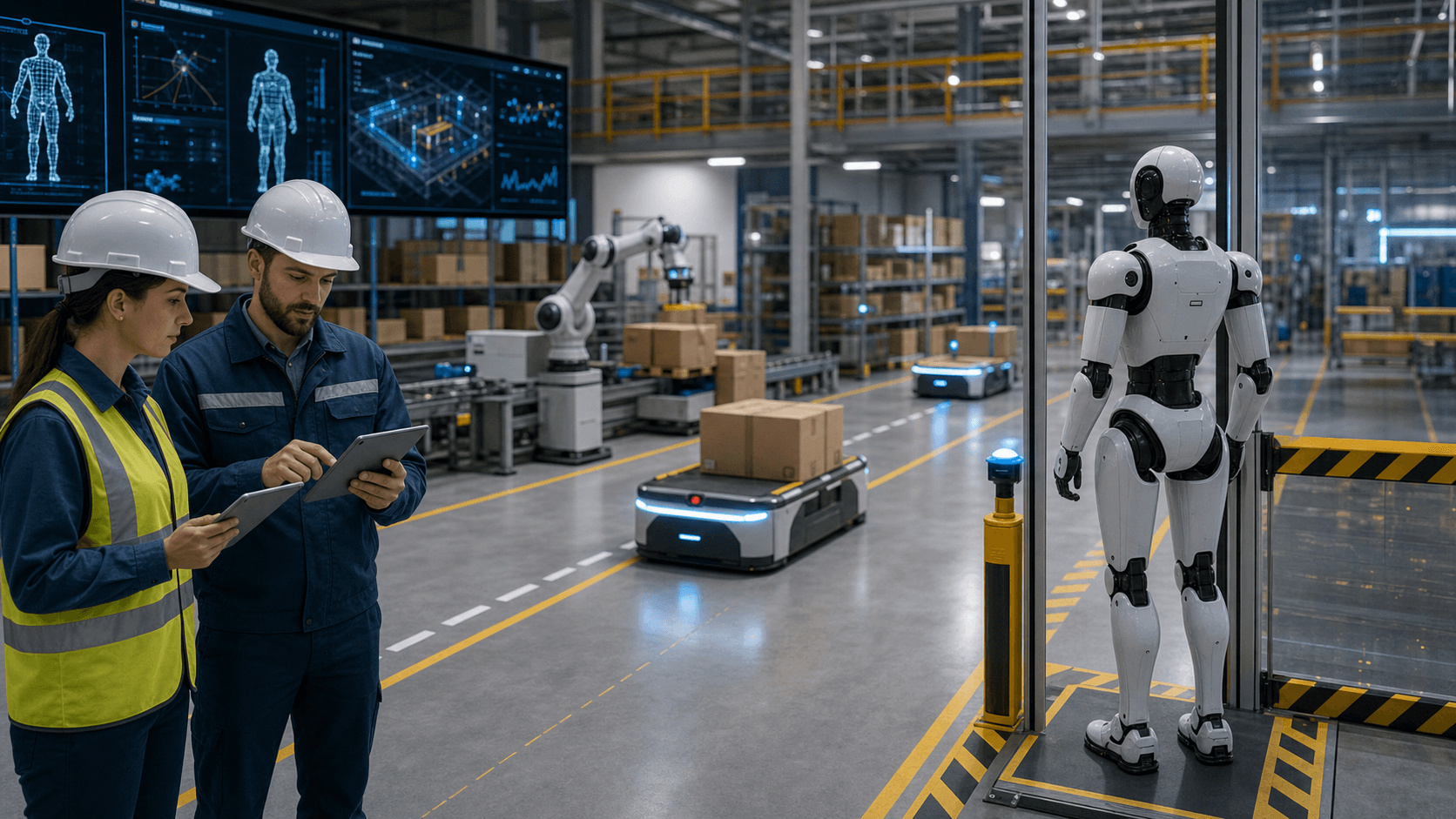
This is not simply a chatbot being placed beside a factory dashboard. Industrial work is a chain of decisions in which a small design problem becomes more expensive as it moves toward production. UST wants Claude to sit inside validation and engineering workflows so teams can find faults earlier, while people retain approval over actions that can change equipment, production, or customer-facing systems.
How Claude is used in chip validation
UST says Claude Code can read the schematics and pinouts engineers work from, then write and run regression tests. Those tests check that a design change did not create an unintended downstream failure. Engineers have traditionally written much of this scripting by hand, run it, inspect the output, and repeat the cycle. A model that can hold the context of a design across a long task could reduce repetitive work and make earlier testing easier to organize.
The company also described iDEC, a UST platform for validating hardware and silicon before production. Its closed-loop process compares live equipment data with a digital twin, a software model of how the hardware should behave. UST reports that the system already reduces validation cycles by 50 to 70 percent, including a move from standard four-day turnarounds to 48 hours. Those figures are a company report rather than an independent benchmark, but they show the kind of measurable outcome the partnership is targeting.
The same model reaches beyond chips
UST says Claude will also support healthcare, telecom, and banking platforms. In healthcare, the proposed workflow turns scattered claims and care data into suggested next steps, with a person approving any recommendation before it reaches a member. In telecom, Claude helps operators separate meaningful network alerts from noise, predict failures, and run response workflows that still require human approval.
In banking, the challenge is often not inventing a new system but working safely around core platforms that may update only periodically. UST says its FinX platform will use Claude for case handling, knowledge retrieval, workflow support, and decision assistance. That distinction matters. An AI agent becomes more useful when it has a narrow job, defined permissions, evidence, and a clear handoff, rather than unlimited access to every enterprise system.
Why human control is part of the story
A wrong answer in a factory, network, bank, or healthcare workflow can become a physical outage, a financial loss, or a decision that affects a person. UST therefore emphasizes audit controls, data boundaries, digital twins, and approval steps. These controls do not erase the speed advantage of an AI assistant. They make the assistant’s path visible and give an operator a chance to stop or correct it.
The partnership is a useful sign of where physical AI is heading: models are being connected to the systems that build and operate real products. The model is only one layer. Reliable data, scoped tools, accountable owners, rollback paths, and human review decide whether the system belongs in production. Source: Anthropic, “UST is bringing Claude to physical AI,” July 9, 2026 — https://www.anthropic.com/news/ust-claude
Physical AI needs disciplined process, not a dramatic demo
A chip-validation or factory workflow is different from asking a chatbot for a polished paragraph. Engineering teams work with specifications, versions, test benches, measurements, safety procedures and a long chain of dependencies. A useful AI system has to fit that chain: it must know which source is authoritative, show what evidence supported a suggestion, respect the boundary between simulation and a live system, and leave a trace that an engineer can review. The attractive part of the story is speed; the essential part is whether the speed is repeatable without hiding risk.
Digital twins are a good example of the distinction. A digital twin can compare a model of equipment or a design with incoming data and flag a difference worth investigating. It does not automatically mean the difference is a defect, nor should it automatically change a production setting. Sensor noise, stale inputs, an incomplete model of the physical system or a change in operating conditions can all create a convincing but wrong signal. AI can help surface patterns and prepare test cases, while engineers remain responsible for deciding what the evidence means.
The strongest near-term use is often narrow and measurable: turning a specification into draft regression tests, finding a missing test condition, summarising logs from a failed run, comparing a known design change against a library of past issues, or helping an operator find the right procedure. Each use case should have a baseline, a review point and a clear definition of harm. That makes it possible to improve a process without pretending that a language model has become the owner of a factory or a chip design.
Questions to answer before putting AI into an industrial workflow
First, establish data lineage. Which schematics, pinouts, test records and equipment signals can the system see? Who confirms that they are current? Can sensitive design material leave the customer environment, and what is retained after a task ends? Industrial AI is only as trustworthy as the data boundaries around it. A fast answer built from an outdated revision can be more dangerous than no answer at all.
Second, design the human handoff before an incident. Define which recommendations may be accepted automatically, which require a second engineer, which demand a safety review and which must never reach a live control system. Capture the model’s output, the tools it used and the evidence a reviewer saw. This is not bureaucracy for its own sake; it is how a team learns whether an apparent productivity gain is genuine, and how it explains a decision when something goes wrong.
Finally, measure outcomes that matter to the operation: time to find a defect, false-alarm rate, rework avoided, test coverage, engineer effort and safety incidents. A claim that a cycle is faster should be tested over enough work to show that quality did not quietly move downstream. The UST and Anthropic announcement is important because it points toward AI embedded in real engineering loops. Its credibility will come from auditable results, sensible limits and people who can intervene—not from the fact that the system uses a frontier model.
“Good technology journalism helps the reader make a better decision after reading.”
About the author

Michael Lee
Infrastructure Editor
Michael covers chips, cloud platforms, data centers, software infrastructure, and the economics behind large-scale computing.