

AI Browsers Are Turning Search Into a Workflow Layer
Why AI browsers and agentic search matters now, what can go wrong, and how technology teams should plan for the next phase.

AI Editor
Key takeaways
- The practical response is to design permission gates, visible citations, reversible actions and clear separation between reading, suggesting and doing. That means budgets, governance, vendor questions, safet...
- The weak point is this: an agentic browser can save time but can also click, copy or submit the wrong thing if control boundaries are weak. If teams ignore it, they may ship a fascinating capability that bec...
- In the end, search becomes less of a page of links and more of a supervised work surface. The companies that treat the trend as infrastructure work will have an advantage over companies treating it as a laun...
Summary
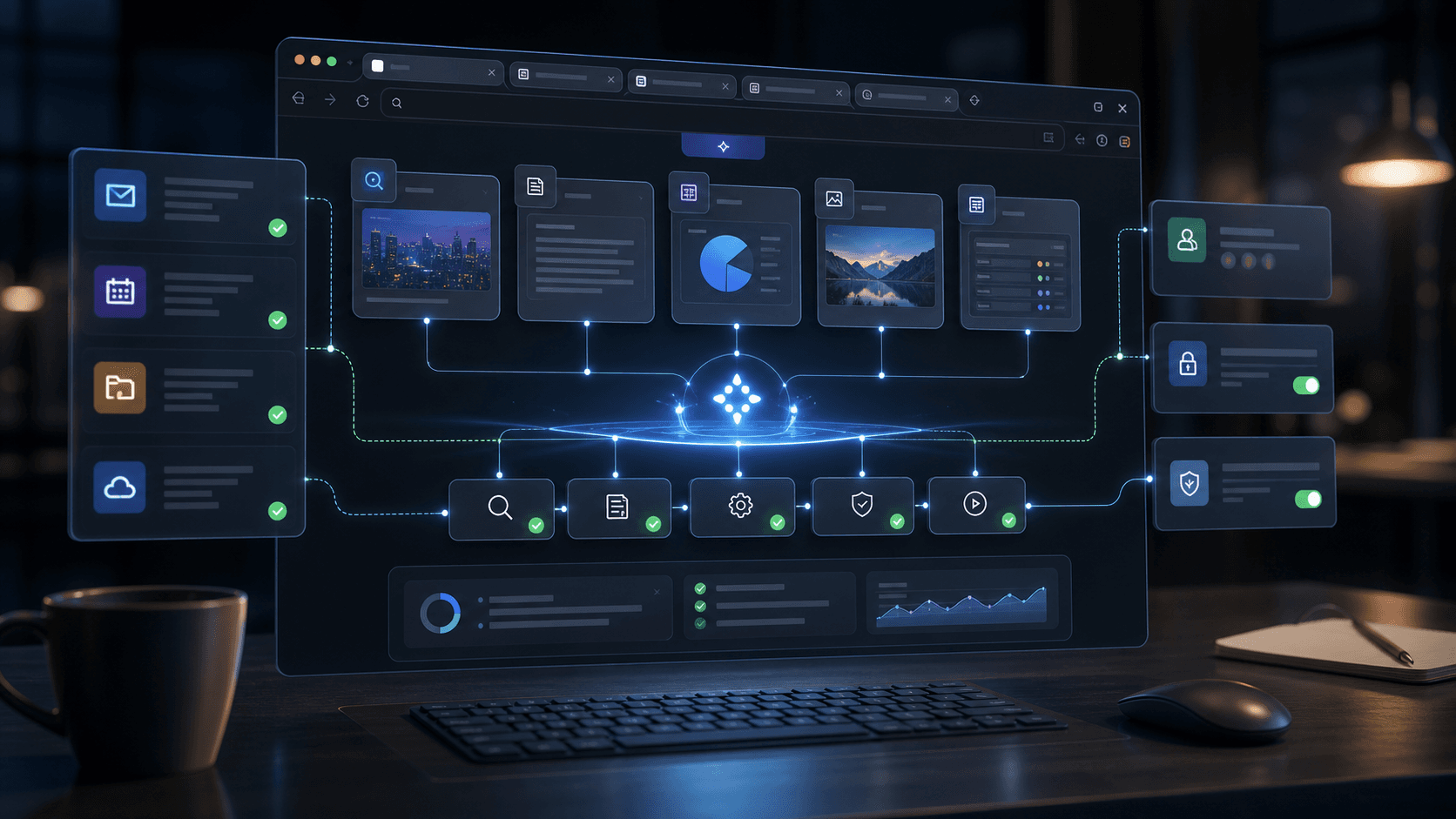
AI browsers and agentic search is moving from a research or demo story into a deployment question. The reason is clear: browsers are starting to summarize, compare, act across tabs and connect search results to calendar, email, files and business apps. When a technology reaches this stage, the hard part is rarely the announcement; it is the operational system around it.
The practical response is to design permission gates, visible citations, reversible actions and clear separation between reading, suggesting and doing. That means budgets, governance, vendor questions, safety checks and measurements have to arrive before the product promise becomes too loud.
The weak point is this: an agentic browser can save time but can also click, copy or submit the wrong thing if control boundaries are weak. If teams ignore it, they may ship a fascinating capability that becomes expensive, unreliable or hard to explain when users depend on it.
Article
The safest roadmap starts with one useful workflow, a measurable baseline, a human fallback and a review loop. Teams should prove reliability in boring environments before expanding to dramatic ones.
For English-speaking enterprise buyers, the buying question will be less about novelty and more about uptime, liability, integration, cost per task and whether the system can be audited after an incident.
This is where product discipline matters. A team that can say no to unsafe scope will move slower at first, but it will learn faster because failures stay contained and customers keep trusting the process.
In the end, search becomes less of a page of links and more of a supervised work surface. The companies that treat the trend as infrastructure work will have an advantage over companies treating it as a launch campaign.
“Good technology journalism helps the reader make a better decision after reading.”
About the author

Emma Wilson
AI Editor
Emma writes about applied AI, automation strategy, platform shifts, and the practical impact of emerging technology on companies.